

When Speech Becomes “Treatment”: The Free Speech Stakes in Chiles v. Salazar
- Mathew Habib
- Nov 9, 2025
- 2 min read

Xylee Alvarez
November 2025
Can a truly void judgment ever expire?
At its heart, Coney Island Auto Parts, Inc. v. Burton asks one deceptively simple question: if a court never had personal jurisdiction, can its judgment ever be too old to challenge? The petitioner, Coney Island Auto Parts, argues that a void judgment should be treated as if it never existed, so it can be challenged at any time, regardless of how many years have passed. On the other hand, the bankruptcy trustee, Jeanne Burton, argues the opposite, that Rule 60 of the Federal Rules of Civil Procedure says even void judgments must be challenged within a “reasonable time”, because courts need finality and can’t let cases stay open forever.
Listening to this argument felt like listening to a philosophical tug-of-war between fairness and finality. Daniel Ginzburg, arguing for Coney Island, maintained a firm, deliberate tone throughout this hearing, even when questioned by Justice Thomas about whether Ginzburg believed no time limit whatsoever applied. The conviction in a statement like “no reasonable time” carries significant risk. However, it wasn’t just Justice Thomas who delved into such strong questioning. It seems to me that, in a way, the court was beginning to just spark off one another's words, with a few Justices being so eager to speak that they began to cut one another off to question Ginzburg.
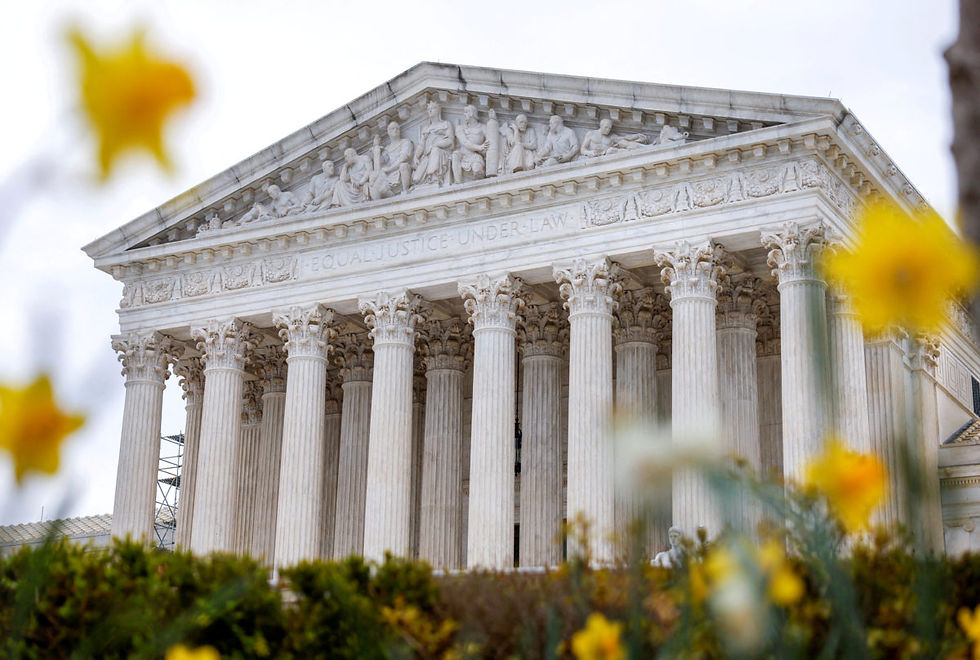
Justice Jackson, for example, raised real concerns about Ginzburg's argument: if there’s no time limit, could someone suddenly come back decades later to try to reopen an old case? I feel this question served as a stepping stone for the court to realize that, in this context, “fairness” can truly get blown out of proportion as time passes and people build their lives and decisions around old outcomes. Justice Sotomayor picked Ginzburg’s brain, presenting a series of “what if” questions, and arguing that Ginzburg gave up the argument that the Federal Rule of Civil Procedure is unconstitutional when Ginzburg began to discuss the due process clause.
Looking at things from the flip side leaves me personally torn. I see the argument behind Coney Island because it FEELS like a line that shouldn’t be crossed, even by the passage of time, but feelings may not be enough in this case. Lisa Blatt, Burton's lawyer, focused on the fact that you can't let a case linger forever; people need that closure. I found myself appreciating her argument and how she often emphasized that people may not have the resources to let a case linger forever; they can’t just stop what they’re doing and hire a lawyer for a case they weren’t even aware of. This consideration, I believe, sets her argument apart from Ginzburg's.
I believe that the court will rule 9-0 in favor of Burton, holding that the “reasonable time” limit in Rule 60 applies even to void judgments. The justices may have different reasons, but I believe they’ll all agree that there must be a limit on when a judgment can be challenged.


Comments